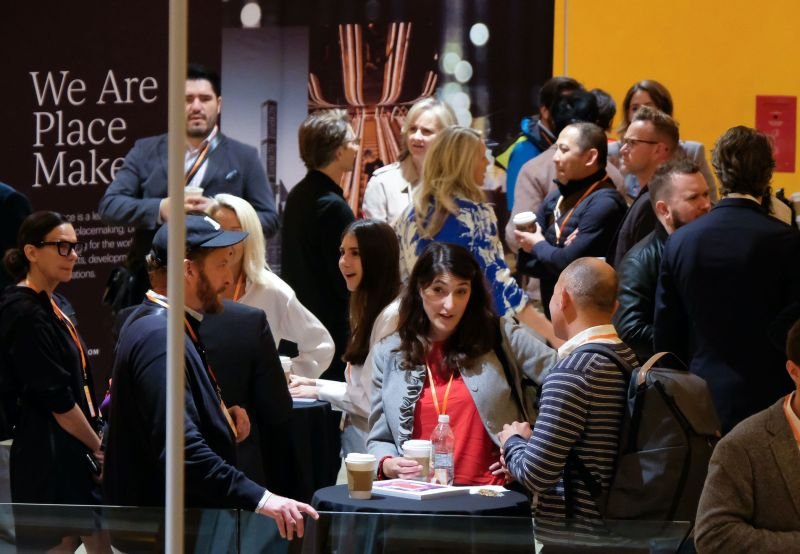

Join a radically optimistic community of urban innovators shaping better cities and better futures.
The future of cities is not just built; it is cultivated through dialogue, imagination, and a shared commitment to transformation.
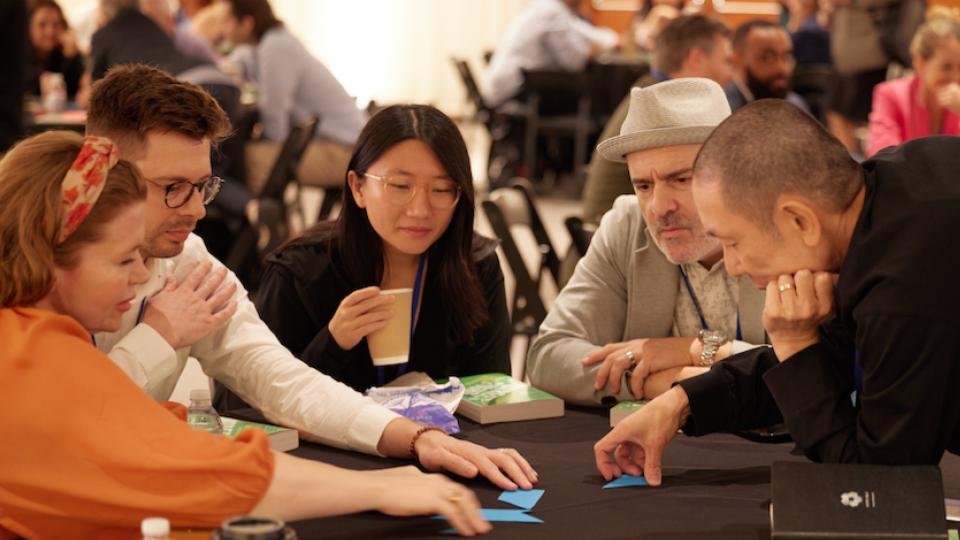
WRLDCTY Global Fellows are a small-group at the forefront of the movement to foster the world’s next cities: regenerative, innovative and inclusive places where people and planet prosper.
Join our collective of urbanists, visionaries, artists, policy shapers, business leaders, activists, and innovators whose diverse ideas, perspectives and lived experiences are shaping the future of global cities where humanity can shine.
We believe that the complexity of cities demands both curiosity and courage. Through meaningful exchanges, hands-on explorations, and radical collaboration, we are fostering a better tomorrow.
-
Alexandra Janos is the founder of Place Insights, a firm specializing in data-driven placemaking and urban strategy. She helps developers, cities, and institutions understand how people use and perceive spaces, providing insights that inform design and programming decisions. Her work integrates behavioral research, market intelligence, and human-centered design to support functional, engaging urban environments.
-
Dr Anne Kovachevich leads sustainable building and precinct strategies at Mott MacDonald. Her work integrates environmental science, engineering, and policy to deliver low-carbon, high-performance developments. Based in Brisbane, she focuses on resilience and climate-adaptive design, ensuring that urban projects are environmentally responsible and operationally efficient at scale.
-
Chris leads a global team in destination placemaking, branding, and marketing. Proficient in trend analysis, visioning, and city planning, he created the World’s Best Cities rankings for over 400 cities in 2016. A respected speaker on tourism, real estate, and urban development, he has also chaired the Urban Land Institute’s Travel Experience & Trends Council and teaches Placemaking at New York University.
-
Daryl Condon is a Principal at HCMA Architecture + Design, specializing in civic, recreational, and community-focused projects. He designs public infrastructure that enhances accessibility, social interaction, and community well-being. Condon emphasizes thoughtful planning and design that addresses functional needs while supporting the everyday experiences of diverse urban populations.
-
Dominic Audet has spent over two decades turning public spaces into places people never want to leave. As co-founder of Montreal-based Moment Factory — behind more than 600 large-scale experiences worldwide — he blends architecture, technology, sound and storytelling to spark genuine human connection in the real world. From the Bernabéu Stadium in Madrid to the children's galleries of Singapore's Mandai Wildlife Reserve, Dominic leads Moment Factory's global vision for what it means to bring people together in an age of infinite digital distraction.
-
Doug is an Associate Principal at CMG Landscape Architecture, dedicated to transforming the public realm at every scale — from neighborhood parks and marginalized spaces to ambitious vision and master plans. He is driven by a deep passion for connecting people to nature and creating vibrant, inclusive spaces that bring communities together.
-
Gary Gaston leads the Civic Design Center, a nonprofit focused on improving civic participation through thoughtful design. With a background in architecture and urban planning, he champions inclusive processes that empower communities to shape neighborhoods. Gaston’s work emphasizes that effective civic engagement and clear communication are essential to building trust and confidence in public systems.
-
Ginger Gosnell-Myers advances Indigenous inclusion in urban planning and policy. She ensures that Indigenous voices, histories, and rights are integrated into city governance and development. Her work emphasizes reconciliation, cultural stewardship, and community-centered approaches, providing frameworks for urban planning that respect heritage, equity, and participation.
-
Heath is a design and integration leader specialising in complex, multi-stakeholder challenges across infrastructure, precincts, and city-shaping programs.
He has worked on major Australian and international initiatives across transport, education, precinct renewal and large-scale masterplanning, bringing clarity to environments characterised by technical complexity, competing priorities and high public visibility.
Trained in landscape architecture and business management, Heath brings a design-led mindset to complex delivery systems. He is known for aligning creative ambition with engineering realities, governance structures and stakeholder expectations to deliver coherent, high-performing outcomes. His career includes senior leadership roles within global firms, where he has grown and led integrated design teams operating at scale.
Having worked across Australia, the Asia-Pacific, the Middle East and Africa, Heath brings a systems-level perspective to projects. He positions himself at the centre of complexity to unpack issues, connect conversations and align objectives, with a focus on early integration, disciplined governance and sustaining intent as projects move from vision to delivery.
A WRLDCTY Global Fellow, Australian Institute of Landscape Architects Fellow, and member of the Open House Melbourne Building Council, Heath is a respected voice on integrated design, cross-sector collaboration and the long-term performance of cities.
-
Rajiv Ahuja is an associate director at the Milken Institute’s Center for the Future of Aging, where he leads initiatives advancing longevity and improving dementia care through policy, research, and cross-sector partnerships. His work focuses on building coalitions that connect health, technology, and business to drive better outcomes for aging populations. Through his broader work, he is shaping new models for healthier, longer lives at both system and societal levels.
-
Steven Cornwell develops branding and strategic narratives for cities, districts, and cultural destinations. He transforms urban culture, history, and innovation into cohesive strategies for perception, engagement, and functional activation. Cornwell’s work supports cities in articulating identity and creating environments that are coherent, operationally effective, and culturally vibrant.
-
Item descriptionAnn-Britt Elvin Andersen is Chief Communications Officer at BLOXHUB in Copenhagen and a member of its leadership team. She works at the intersection of urban development, innovation, and strategic communication, with a career spanning the innovation sector, media industry, and the built environment.
She is the main author of The Paradox of Proximity: Preventing Urban Loneliness, a globally recognized publication that explores how cities can be physically dense yet socially disconnected. Drawing on cases from Europe, North America, and Asia, the work has helped position loneliness as both a public health concern and a design challenge for cities.
Ann-Britt co-leads the international initiative Unlonely Cities, which aims to shift the conversation from reactive interventions to proactive, design-led approaches that foster belonging and social wellbeing. Her work focuses on bridging disciplines and sectors, connecting urban planning, public health, and community innovation.
She has worked extensively across Asia, North America, and Europe, building partnerships and driving international collaboration. Known for her ability to translate complex ideas into compelling narratives, she mobilizes stakeholders across sectors and geographies.
Ann-Britt holds degrees from the University of Copenhagen and the University of Essex and Harvard Business School.
-
Tulsi Grover is a Senior Partner at weareMIXD with over 20 years of experience across hospitality, mixed use, workplace, and experience driven projects throughout Asia, the Middle East, and Australia. He has worked with global hospitality brands including IHG, Hyatt, Hilton, Accor, and Marriott International, leading projects that balance operational performance, cultural relevance, and long term value. Prior to weareMIXD, he was Managing Principal at Hassell Singapore.
At weareMIXD, Tulsi works across hospitality, culture, experience, and strategic place thinking, helping shape projects that connect cities, communities, and human behaviour through multidisciplinary and experience led systems. Alongside his role at weareMIXD, he is also the founder of re.vorG, a design consultancy focused on regenerative and experience led environments.
-
Andrea Curtis is a Vancouver-based cultural strategist and executive leader who bridges creative vision, civic impact, and sustainable growth. She is the founder and principal of BAM, a consultancy that helps cities and organizations harness the economic and social potential of the creative sector.
Andrea has founded and led multiple cultural institutions and festivals, including Vancouver Mural Festival and VMF Winter Arts, Canada’s first festival of public augmented reality installations. Over the past decade, her work has supported the careers of more than 500 public and digital artists, helped spark a mural movement across Western Canada, and advanced the recognition of culture as essential civic infrastructure that shapes identity, belonging, and quality of life.
Today, Andrea works with organizations and local leaders to measure the economic impact of cultural ecosystems and develop strategies for authentic, creative communities. Her work increasingly explores how cities can foster vitality while confronting the displacement and inequities that often accompany urban transformation.
-
As the Founder of Neuropower World, Hazleen is a global expert in brain-based leadership, human performance, and behavioral transformation, working with leaders and organizations to unlock clarity, resilience, and high-impact decision-making.
With a background spanning neuroscience, leadership development, and executive coaching, her work focuses on how individuals think, adapt, and perform under pressure, translating complex science into practical strategies that drive real-world results.
Hazleen brings a powerful perspective to the table, one that connects mindset, performance, and leadership in a way that shapes how decisions are made and how outcomes are achieved, with a mission to build Asia's first comprehensive neuroinclusion ecosystem.Building on this mission, Hazleen founded Hazleen Ahmad Global Impact Ventures, a women-led think tank and trust fund that supports women- and youth-led innovation worldwide. By combining her expertise in inclusion with strategic investment and advisory support, the trust fund connects investors with high-impact ventures, scaling initiatives that advance systemic change while promoting equitable opportunities for underrepresented talent.
An active global speaker, Hazleen has shared her expertise at the C4IR, World Economic Forum, Pontifical Academy, Vatican, Cambridge University, and with corporations including Schneider Electric, Cisco, and Microsoft. She advises venture capital firms and network connector organizations, using her insights in applied neuroscience, inclusive innovation, and systemic impact to inspire collaboration, mobilize resources, and advance transformative initiatives globally. -
Hila Oren leads the Tel Aviv Foundation, overseeing initiatives that enhance public engagement, urban infrastructure, and cultural programming. Her work focuses on integrating community needs, civic participation, and city branding to strengthen urban identity and foster functional, accessible, and well-structured city initiatives.
-
James Lima is President of JLP Partners, advising cities, developers, and institutions on large-scale urban transformation projects. He specializes in strategic planning, mixed-use development, and public-private partnerships, ensuring that projects align with economic, social, and infrastructure goals. Lima’s work emphasizes comprehensive planning that delivers measurable civic and economic outcomes.
-
Jasmine is a community builder who specializes in innovative engagement methods that encourage imagination and collaboration. Her career has been spent balancing the worlds of innovation, tech and design to bring diverse groups together to envision and build better places - from innovation districts to main streets, parks, alleys, higher education labs, cultural institutions and more. She combines strategic foresight, human-centric design, storytelling and memorable moment-making to create programs that build capacity for community transformation and more resilient cities.
-
Katherine is an international leader in strategy, design and management for complex public places.
As the Manager of Special Projects for the City of North Vancouver’s Shipyards and Waterfront, she leads initiatives to elevate the public space experience, and to advance partnerships and investment.
Katherine is best known for leading the creation of VanPlay — Vancouver's award-winning parks and recreation services master plan, setting out a 100-year vision for equitable access to green and recreational space across one of the world's most liveable cities. A sought-after voice on place management, spatial equity and urban wellbeing, Katherine has keynoted the World Urban Parks Congress, Parks and Leisure Australia and WRLDCTY, bringing a rare blend of strategic rigour and genuine passion for the places that make cities worth living in.
-
Mark Shieh started his career as a Disney Imagineer — and he never quite lost the conviction that the places we inhabit should make people genuinely happier. As co-founder of Tomo Spaces, he has channelled that belief into a quieter but equally ambitious project: reimagining how people live together in cities. Tomo — meaning "together more" — pioneered the concept of "cohousing lite" in Vancouver, making community-oriented, shared living accessible to a broader demographic without the complexity of traditional cohousing models.
-
Nadia Levi is the Senior Vice President leading Land Use Strategies at Colliers. She works with cities, public agencies, and private partners to understand the economics behind land and development, and to turn that insight into clear, workable strategies. Her team focuses on market intelligence, land use, feasibility, and destination planning—helping clients see what’s possible, what’s practical, and what will actually move forward. Nadia has worked on projects across North America, from innovation districts to major redevelopment sites, always grounding big ideas in what the market can support.
Nadia works closely with governments, industry partners, and Indigenous communities to connect policy direction with capital and infrastructure decisions. She is known for her steady, feasibility‑first approach and her ability to navigate competing interests without losing sight of long‑term value. With a background in engineering and planning, she brings a practical lens to sustainability, design, and implementation—focused on shaping places that are economically resilient, socially inclusive, and built to last. -
Samantha is Global Head of Sustainability at Hassell, where she works at the intersection of design, strategy, and investment to turn sustainability ambition into tangible value. She specialises in aligning climate, social, and economic outcomes—helping organisations use design to unlock performance, resilience, and long-term returns. Her experience spans over 20 countries and multiple sectors, from city-scale infrastructure to major development portfolios. Prior to Hassell, she led Development Victoria’s first sustainability strategy and spent 15 years at Arup, working across Sydney, Singapore, Los Angeles, and Melbourne. Samantha brings a systems-based perspective to complex urban challenges, with a focus on moving beyond risk mitigation, compliance and the traditional view of sustainability—positioning multi-dimensional value as the core driver of how cities grow, adapt, and compete.
-
Stefan Meissner is Head of Urban Design at Colliers Urban Planning and a specialist in precinct-scale urban design and delivery. His work integrates political, economic, and social drivers into cohesive place strategies, translating complex and competing forces into high-quality urban outcomes. With experience spanning public, private, and academic sectors, he brings a holistic approach to shaping cities that are both strategic and deeply human.
-
Stephen Ritz is an educator and founder of Green Bronx Machine, a nonprofit using urban agriculture to transform schools and communities. His initiatives provide youth with access to food systems education, environmental stewardship, and practical skills. Ritz’s programs demonstrate the power of hands-on engagement to drive education, health, and social outcomes at the neighborhood level.
-
Vance Harris is a Partner at DIALOG and a recognized leader in regenerative design and urban systems thinking. He integrates climate resilience, social equity, and large-scale infrastructure planning to create districts and communities that are sustainable, connected, and future-ready. Harris’s work spans campuses, neighborhoods, and urban precincts, emphasizing integrated design solutions that enhance both functionality and human experience.
-
Jakob Norman-Hansen is a leading Nordic voice in the future of sustainable cities and urban innovation. As Director of Global Networks & Partnerships at BLOXHUB, he builds bridges across sectors, borders, and disciplines to accelerate new solutions for more resilient and regenerative urban development. Through his work, he connects the Nordic ecosystem of companies, cities, and organizations with global partners shaping the next generation of urban futures. In addition to his role at BLOXHUB, Jakob serves on the Executive Committee of ULI Denmark, contributing to the dialogue on how cities can evolve to meet social, environmental, and economic challenges. He is a sought-after keynote speaker and facilitator, dedicated to translating complex issues such as social infrastructure, circular construction, and urban regeneration into actionable collaboration. Drawing on experience from Copenhagen and numerous urban initiatives in cities across the globe, Jakob brings a global perspective to the sustainable transformation of cities.
-
Jessica Myers is the founder of The Sandbox Collective, an independent research and advisory practice exploring the relationship between people, place, and belonging. Her work sits at the intersection of city-building, environmental psychology, community engagement, and human development, examining how the environments we inhabit shape identity, memory, well-being, and everyday life.
A former teacher, economic development leader, and communications strategist, Jessica has spent her career helping municipalities, developers, cultural institutions, and neighbourhood organizations create places that people genuinely connect with. Today, she combines qualitative research, storytelling, and systems thinking to develop new frameworks for understanding the emotional life of cities and the role of place in human flourishing.
Jessica is an internationally invited speaker whose work challenges conventional approaches to placemaking by asking not only how cities function, but how they are experienced. Through interviews, writing, workshops, and advisory work, she is advancing a new conversation about designing neighbourhoods that support belonging, family life, resilience, and long-term community health.