
WRLDCTY Global Fellows – Singapore LabField Notes: Livability. Lovability. Longevity
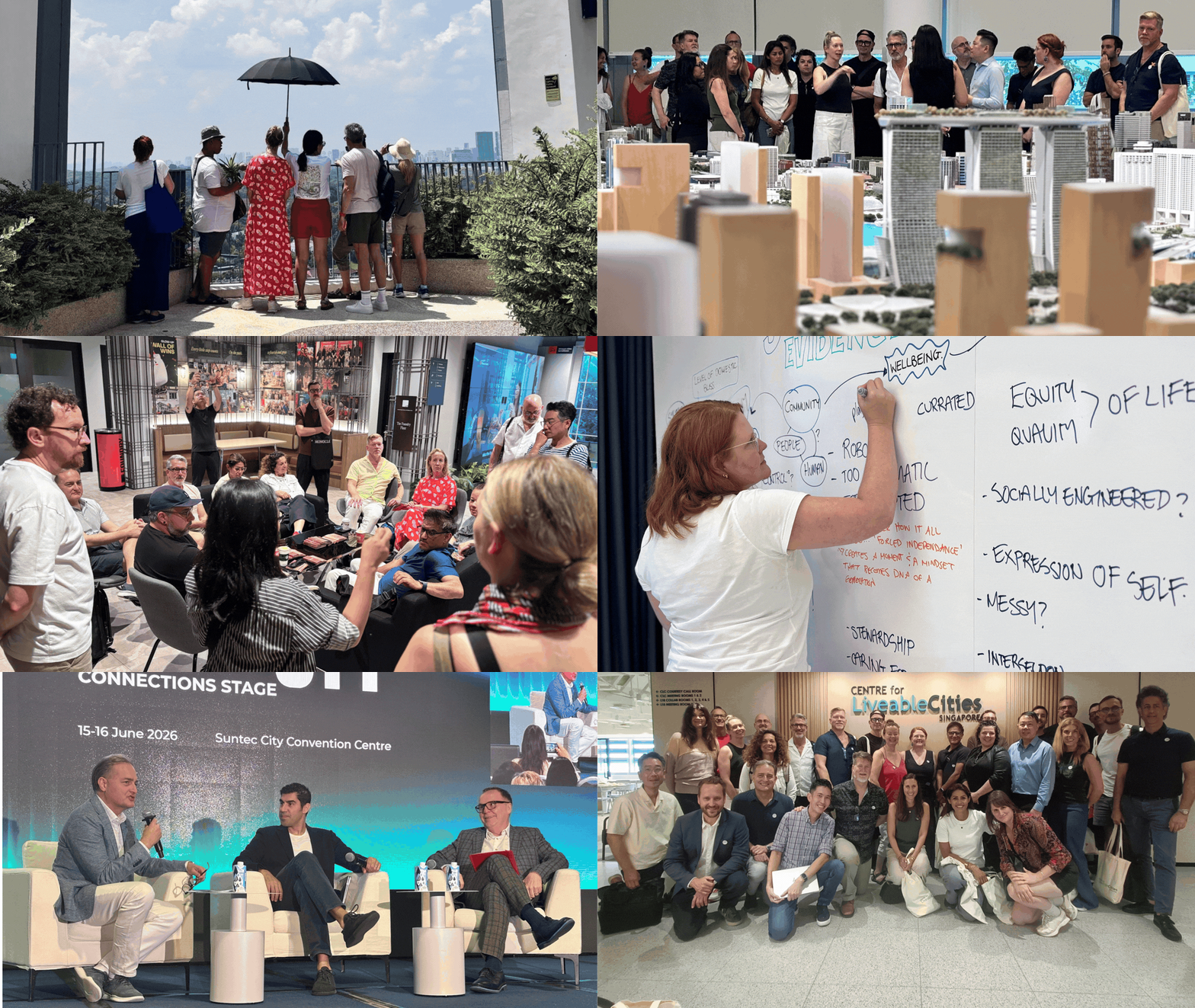
Singapore offered WRLDCTY Fellows both an extraordinary record of what cities can accomplish, as well as a glimpse at some of the questions coming next.
000. Meet WRLDCTY & The WRLDCTY Global Fellows
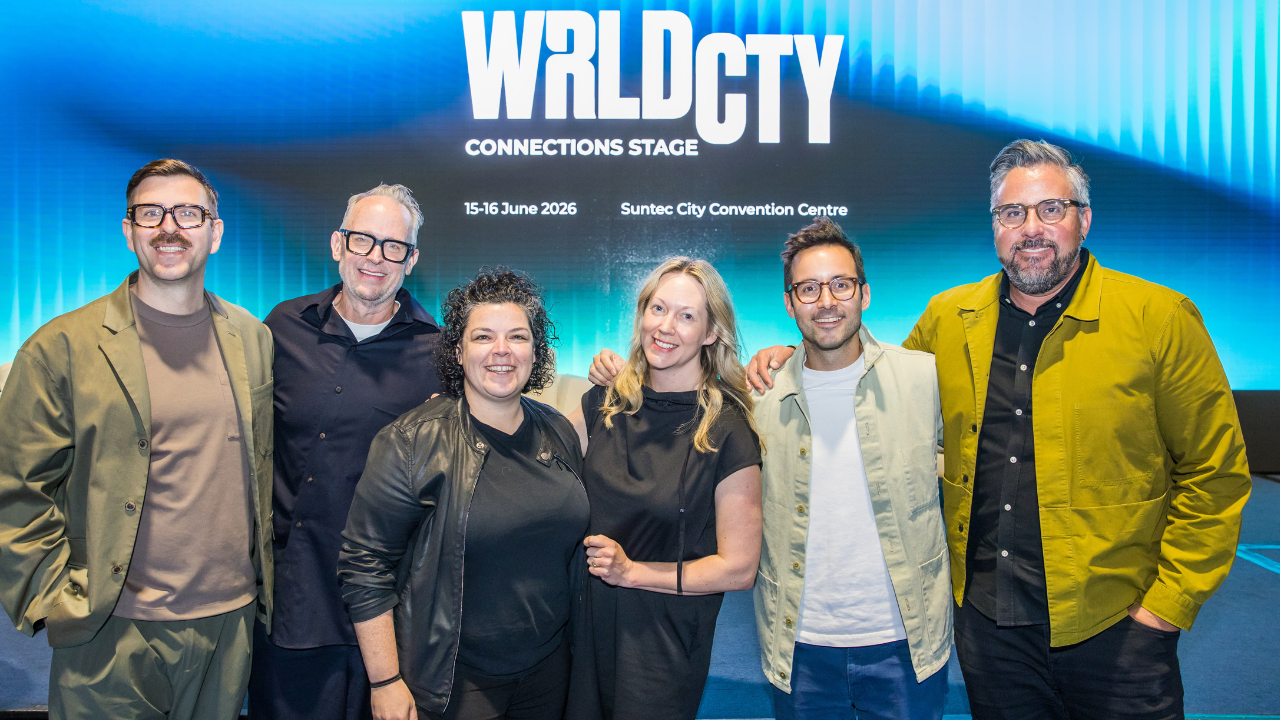
Since 2020, WRLDCTY has been a trusted platform to shape more future-ready cities through community, labs and global forums.
WRLDCTY Global Fellows
WRLDCTY Global Fellows are a small group at the forefront of the movement to foster the world’s Next Cities: regenerative, innovative and inclusive places where people and planet prosper.
Join our collective of urbanists, visionaries, artists, policy shapers, business leaders, activists, and innovators whose diverse ideas, perspectives and lived experiences are shaping the future of global cities where humanity can shine.
We believe that the complexity of cities demands both curiosity and courage. Through meaningful exchanges, hands-on explorations, and radical collaboration, we are fostering a better tomorrow.
Alexandra (Allie) Janos, Principal, Place Insights LLC
Dr. Anne Kovachevich, Sustainable Buildings and Precincts Lead, Mott MacDonald
Chris Fair, President & CEO, Resonance
Darryl Condon, Managing Principal, hcma
Amahl Hazelton, Strategy & Development, Moment Factory
Doug Jones, Associate Principal, CMG Landscape Architecture
Gary Gaston, CEO, Center for Civic Design
Ginger Gosnell-Myers, Urban Indigenous Policy Leader
Heath Gledhill, Partner, Gledhill Shield
Rajiv Ahuja, Founder, WSDM Haus
Steven Cornwell, Global Director, ERA-co
Ann-Britt Elvin Andersen, Chief Communication Officer, BLOXHUB
Tulsi Grover, Senior Partner, We Are MIXD
Andrea Curtis, Place Strategist & Creative Economy Consultant
Hazleen Ahmad, Global Impact Investor, Neurodiversity Advocate & Advisor
Dr. Hlia Oren, CEO, Tel Aviv Foundation
James Lima, President, Planning & Development, James Lima Development
Jasmine Palardy, Founder, The Good Future Collective
Katherine Howard, Place Strategist
Mark Shieh, Co-founder and Principal, Tomo Spaces
Nadia Levi, SVP, Land Use Strategies, Colliers
Samantha Peart, Head of Sustainability, Hassel Studio
Stefan Meissner, Director, Head of Urban Design, Colliers
Stephen Ritz, Founder, Green Bronx Machine
Vance Harris, Partner, DIALOG
Jakob Norman-Hansen, Director, Global Networks & Partnerships, Bloxhub
Jessica Myers, Founder + Principal, The Sandbox Collective
00. INTRO
The WRLDCTY Global Fellows are a diverse group of urban innovators exploring the forces reshaping cities, and what those shifts demand of the people building them.
An uncommon fellowship for uncommon times.
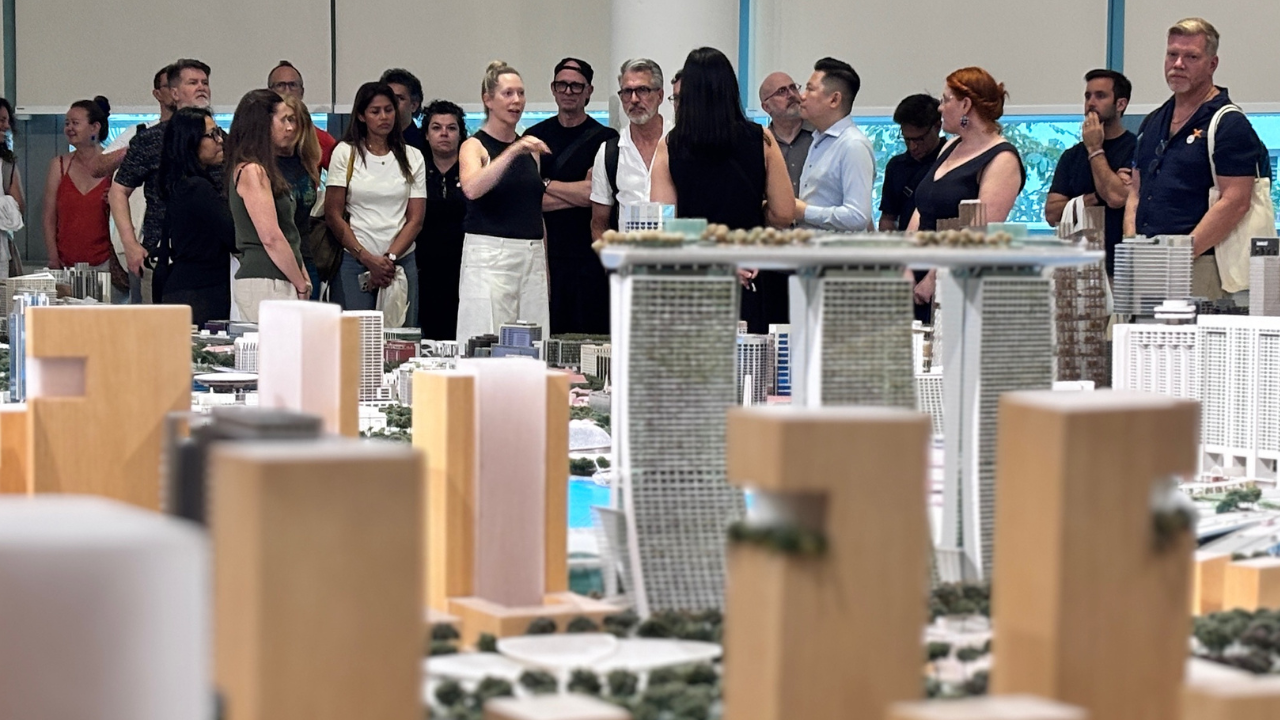
Through WRLDCTY Labs, the Fellows step into cities to examine past, present and possible futures: mapping signals of change, interrogating approaches to city-making, and reflecting on what might translate to their own practices, projects and places.
Singapore offered particularly fertile ground.
In little more than a generation, the city-state has transformed itself through ambitious public housing, infrastructure, mobility, greening and long-term planning. Today, it is also living at the leading edge of transformations confronting cities everywhere: an ageing population, climate adaptation, technological acceleration, changing social structures and the increasingly complex question of how cities support human flourishing.
Singapore offers both an extraordinary record of what cities can accomplish — and a glimpse at some of the questions coming next.
The 2026 Fellows Lab arrived with three lenses through which to examine it:
Livability. Lovability. Longevity.
Not as measures to rank Singapore, but as provocations and evidence from one city already living parts of the future.
What does it take to make a city work exceptionally well?
What makes people care about it?
What allows people, communities, institutions and natural systems to thrive over generations?
And beneath each question: what are the trade-offs?
What follows are field notes from that inquiry: the signals that stood out, ideas that got under the skin, tensions worth carrying, and questions that Singapore adds to an evolving hypothesis about the Next City.
—-------------
01. Livability: the boring baseline?
Singapore makes the fundamentals look easy.
Housing. Transit. Safety. Food. Healthcare. Accessibility. Nature. Public systems that generally do what they say they're going to do. The city is an achievement in livability, hence it appeals to urbanists around the world.
Close to 80% of Singapore's resident population lives in public housing, and about 90% of those households own their homes.
Its rail network already stretches more than 160 miles and is planned to reach almost 225 miles by the early 2030s, with a goal of putting 8 of 10 households within a 10-minute walk of a train station.
Singapore has safeguarded approximately 20,000 acres of green space and is pursuing a "City in Nature" strategy that aims to put every household within a 10-minute walk of a park, expand its nature park network and plant one million additional trees.
In 2026, Singapore officially became a super-aged society, with more than 21% of its citizens aged 65 or older. By 2030, that figure is expected to reach roughly one in four. Rather than treating this simply as a healthcare challenge, initiatives are looking at how neighborhoods, housing, mobility, care and social connection need to evolve around longer lives.
This is what Singapore does particularly well: it treats livability as a system.
Housing connects to mobility. Mobility connects to access. Nature connects to health and climate resilience. Ageing connects to neighborhood design and social connection.
Beneath all of it sit the less visible ingredients: governance, long-term planning, maintenance, institutional capacity and the ability to coordinate across systems.
But during our WRLDCTY Lab’s final reflection workshop, one of our Global Fellows called livability "the boring baseline."
Not because any of this is boring. Plenty of cities are failing spectacularly at delivering these fundamentals, and Singapore has spent decades making difficult things appear ordinary.
The necessities of everyday life should be the starting point for a good city, rather than its highest ambition.
Singapore’s exceptional baseline of livability provided us with the opportunity to ask bigger question - of this city, and all cities - What happens after a city “works”?
Can people shape it?
Can they surprise it?
Can they find somewhere to belong within it?
Can they disagree with it?
Can they build a life that feels like theirs?
A city can create extraordinary conditions for a good life.
But it cannot prescribe what a good life is.
02. Lovability:
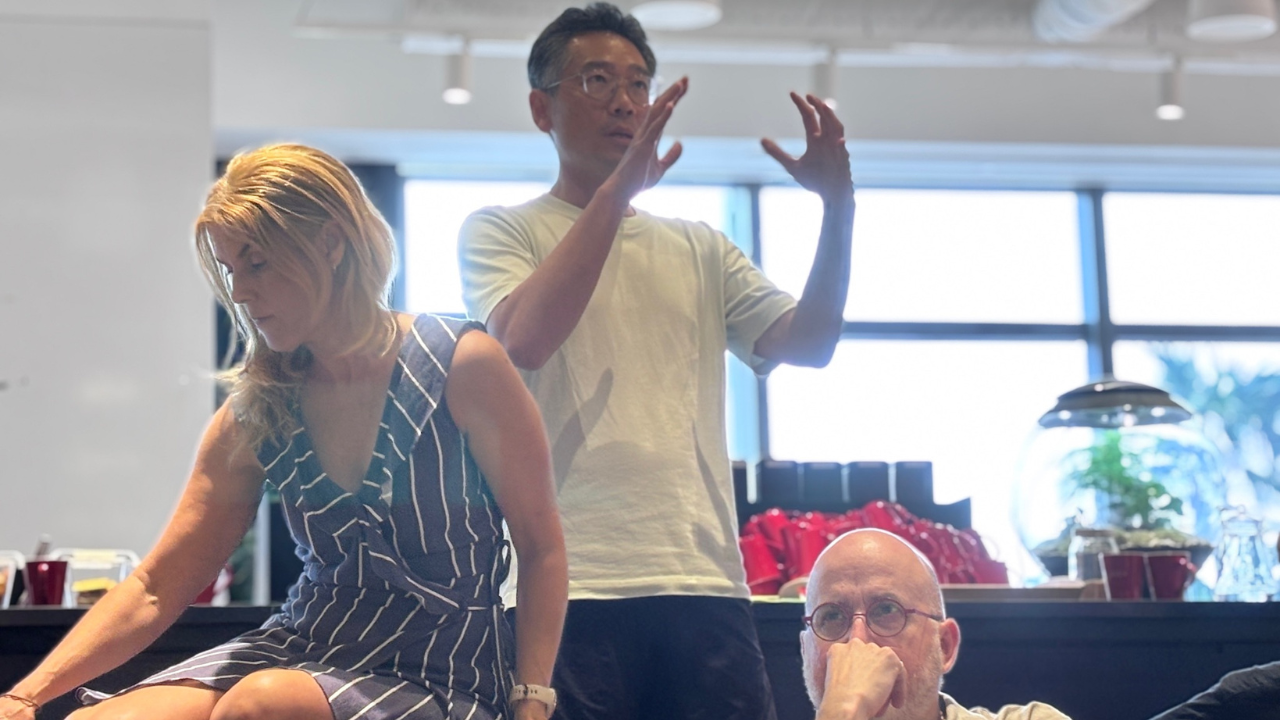
We know it when we feel it. People return to certain places. Defend neighborhoods. Tolerate inconveniences. Invest absurd amounts of energy protecting the things that make somewhere feel like theirs.
“Lovability lives in the friction and dynamism of a place. So, inherently, lovability is by its nature polarizing.” - Alex Baum, WRLDCTY Fellow
Loving a city requires some degree of risk: the freedom to express yourself and experience the expression of others; different cultures, generations and ways of living bumping against one another; the opportunity to experiment, contribute and occasionally get it wrong.
A loveable city means leaving enough unfinished for people to finish themselves.
“Youth need places they can make their own. They need room to gather, hang out, test boundaries, and test identities. That agency is part of thriving.” - Ginger Gosnell-Myers, WRLDCTY Fellow
Youth need places they can make their own, not simply spaces adults have carefully designed for them. They need room to gather, test boundaries, create identities and imagine futures their parents haven't already planned.
That agency is part of thriving, but exposes a tension that can pit ideas of lovability from one generation against another:
What makes a place loveable to someone who has called it home for 50 years may be precisely what a 20-year-old wants to shake up
Memory anchors a place (past). Reinvention keeps it alive (future).
The interesting territory is the negotiation between them: what deserves to endure, and what does the next generation get to mess with?
—-
We tend to describe lovability through what a city gives us: culture, public space, beauty, character, experience.
But love creates obligations. People steward places they care about. They show up. Maintain things. Fight for institutions. Start things. Welcome others. Pass stories forward.
How do we create the conditions for people to fall in love with a place, and enough agency to help shape what it becomes?
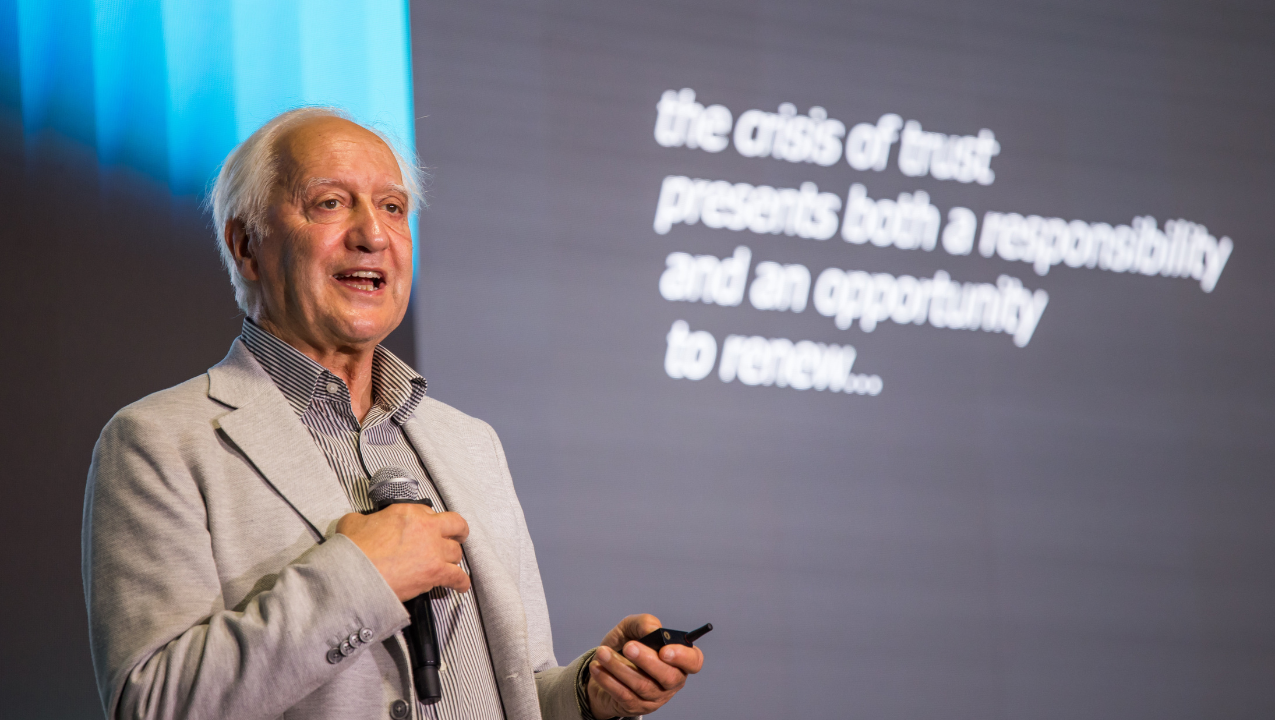
03. Longevity: The 100-year city needs more than ramps and benches
Singapore is already living a near-term future that many cities are about to enter.
It is now a super-aged society, and by 2030 roughly ¼ of its citizens is expected to be 65 or older. Longer lives are intersecting with smaller families, changing patterns of work and care, and new demands on housing, neighborhoods and public life.
That makes Singapore a particularly useful place to observe what comes next - not just for the elderly - but for everyone.
A city cannot wait until someone turns 75 to begin thinking about their well-being. What happens in childhood, adolescence and middle age shapes the decades that follow. Housing, movement, food, nature, social connection, purpose and belonging all become part of the longevity equation.
Singapore has invested in this idea of collective wellbeing: connecting health, housing, mobility, neighborhood design, active ageing and community care. But its example raised a bigger question for us:
“What if we thought of the city itself as a health system; a living system?” - Raj Ahuja, WRLDCTY Fellow
Healthy organisms don't simply perform. They exert and restore. Adapt and repair. Grow and regenerate. And no single organ can remain healthy indefinitely if the wider system is failing. Cities aren't so different.
We ask how cities can become more productive, efficient and active, so. a longevity lens asks where they restore:
Where can people slow down?
Where does nature regenerate?
How do neighborhoods support mental and physical health before someone enters a healthcare system?
Are we leaving enough space for people (and the natural systems around them) to breathe?
Singapore's investment in nearby nature, active mobility, community-based care and aging-in-place makes these questions tangible. It also surfaces a harder one: is the city designed to extend life, or to make a longer life worth living?
What if longevity became a measure of overall systems health: whether a city creates the conditions to live well throughout a long life, while leaving enough health, possibility and purpose for whoever comes next?
04. The coolest infrastructure might be invisible
〰️
04. The coolest infrastructure might be invisible 〰️
Urbanists love hardware: Transit. Architecture. Parks. Technology.
But some of the most consequential infrastructure we encountered was invisible:
Safety. Trust. Maintenance. Governance. Institutional memory. Coordination. Stewardship. Civic culture. Long-term thinking.
Singapore's physical achievements are backed by institutions capable of thinking beyond political cycles, coordinating across systems and maintaining what previous generations built.
Maintenance isn't particularly sexy. Neither is institutional competence. But perhaps we've undervalued both.
Urban innovation culture tends to celebrate the new: pilots, prototypes, breakthroughs, disruption. Singapore prompted another question:
What if caring about ‘systems for stability’ is also a radical form of innovation?
The Next City needs both.
05. Can a city become too good at eliminating friction?
〰️
05. Can a city become too good at eliminating friction? 〰️
This one followed us around Singapore. Efficiency is seductive.
Who wants unreliable transit? Bureaucratic nightmares? Dangerous streets? Dysfunctional services?
But cities are also built from encounters, improvisation and inconvenience.
The person you bump into.
The neighbor you need something from.
The street that gets taken over.
The unexpected detour.
The space without an obvious purpose.
The human interaction that hasn't yet been replaced by an app.
… So we started interrogating friction: Which friction should cities eliminate? And: Which friction do we actually need?
As AI and automation move deeper into urban life, this becomes an urgent focal point.
We can imagine cities becoming extraordinarily seamless: Predictive. Personalized. Automated. Optimized.
But optimized toward what?
That's where the conversation gets interesting.
06. Maybe the real infrastructure is agency?
〰️
06. Maybe the real infrastructure is agency? 〰️
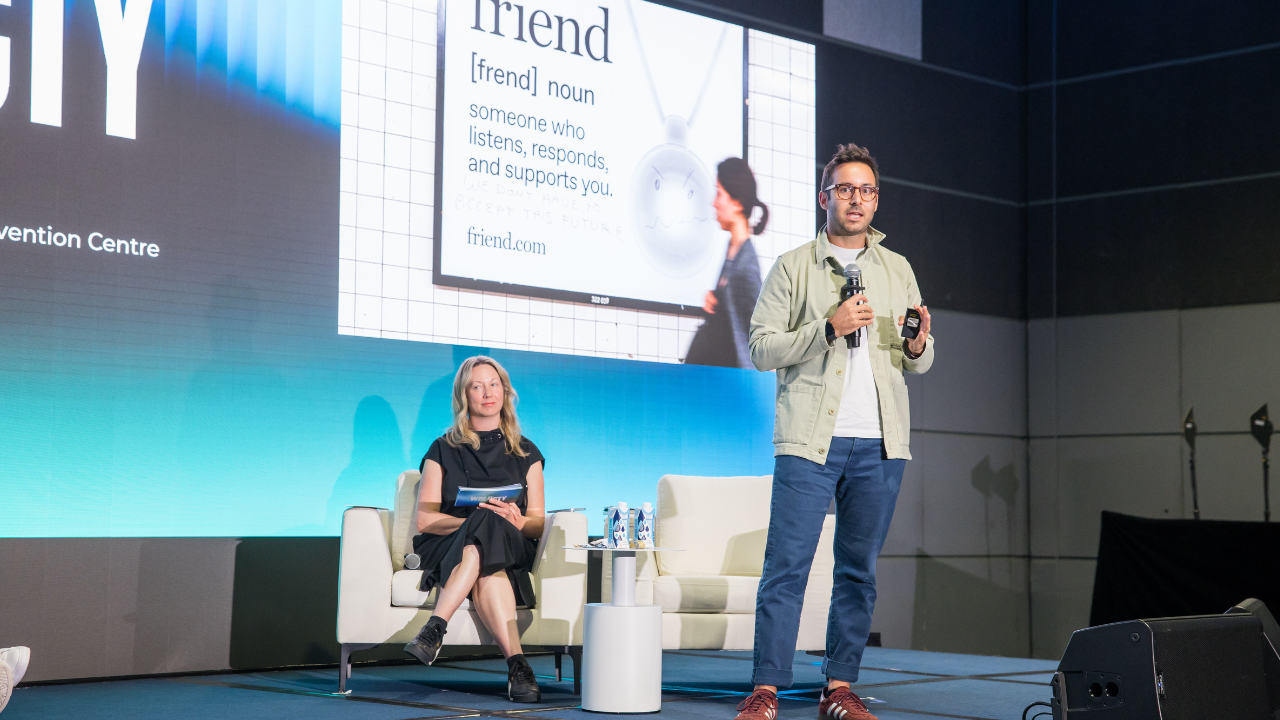
There was another idea running quietly through all three days in Singapore: Agency.
Livability asks whether the city meets your needs.
Lovability asks whether you care about it.
Longevity asks whether that relationship can endure.
Agency asks: Do YOU - as a resident - have a hand in what happens next?
To organize.
Experiment.
Build community.
Start something.
Challenge something.
Change something.
Leave a mark.
There is a profound difference between being well served by a city and feeling some responsibility for it.
The Next City balances exceptional systems and citizens who believe the city partly belongs to them to protect and maintain.
07. The tensions we couldn't resolve …
〰️
07. The tensions we couldn't resolve … 〰️
We didn't leave Singapore with ten recommendations for the city. That’s not what this Lab was about. .
We left with tensions and questions that anyone shaping the futures of cities should carry around:
Efficiency ↔ Spontaneity
Can a city work brilliantly without becoming over-scripted?
Safety ↔ Freedom
How much uncertainty does a vibrant city require?
Planning ↔ Agency
How do capable institutions leave room for citizens to make the city themselves?
Collective wellbeing ↔ Individual expression
What do we owe one another—and where should we be free to choose differently?
Longevity ↔ Reinvention
How does a city endure without becoming attached to the way things have always been?
Technology ↔ Humanity
As machines become extraordinarily good at removing friction, what should remain stubbornly human?
Order ↔ Productive messiness
Where does the weird stuff happen?
08. So, what is a Next City?
〰️
08. So, what is a Next City? 〰️
We came to Singapore talking about livability, Lovability and Longevity.
We left talking about something harder to put on a dashboard:
How people find purpose.
How communities develop trust.
How institutions earn legitimacy.
How citizens gain agency.
How generations remain connected.
How nature fits into the equation.
How technology serves human life rather than quietly defining it.
And how cities keep learning as the world around them changes.
A Next City isn't the city with the newest technology, tallest tower or smartest master plan.
It's a city with enough confidence to experiment and enough humility to question itself.
A city capable of asking not simply: Does this work?
But:
Who does it work for?
What does it enable?
What might it inadvertently erase?
Singapore gave us plenty to admire. More importantly, it gave an uncommon group of people plenty to debate about.
09. Questions We're Taking Home & You Should Ask, Too:
〰️
09. Questions We're Taking Home & You Should Ask, Too: 〰️
What if we measured belonging as carefully as mobility?
Can a city become too efficient?
What should remain wonderfully inefficient, informal and human?
How do we build places people feel responsible for—not simply served by?
What does a hundred-year life demand of a neighborhood?
Where should city governments design for people, and where should they leave room for people to design for themselves?
How much mess does a great city need?
What kinds of infrastructure become more valuable, rather than less, in an AI era?